Finland Singing Heritage
All around country you are able to hear runosongs, folk music, heavy metall and tens of other genres. Now it is your time to choose what to do.
Runosong is a traditional Finnish and Karelian way of singing. People used to sing runosongs all over the country but during the years it disappeared from the west, but stayed alive on eastern side of the country. New generations have discovered the runosongs and use it in their own works.
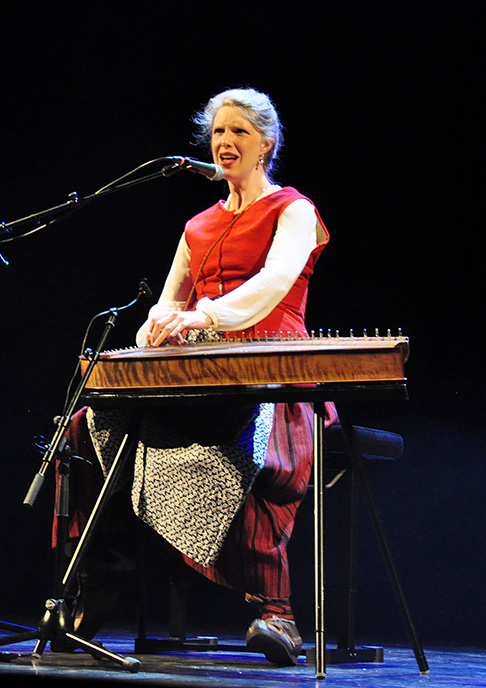
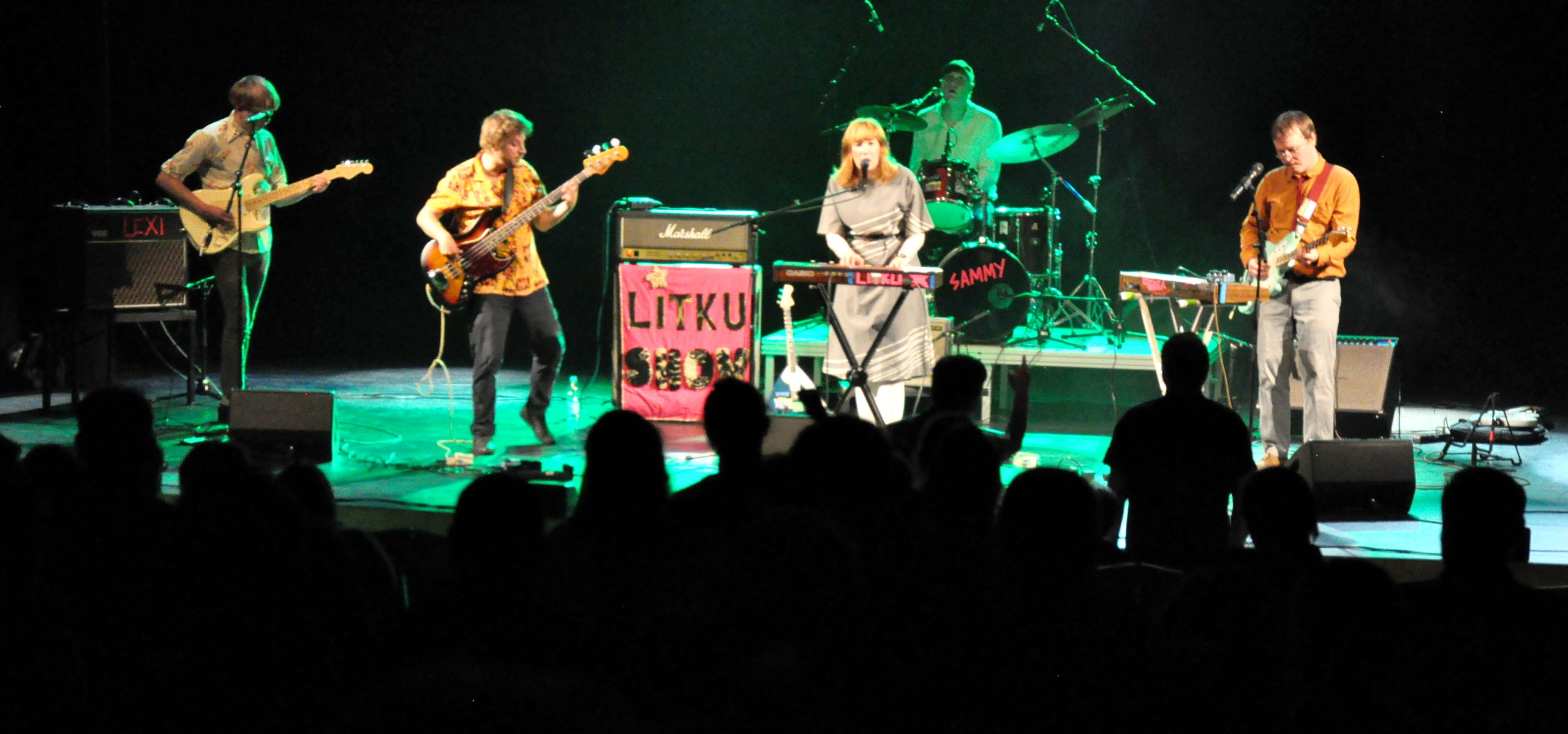
Finnish Singing Heritage
In Finland, the singing heritage is rooted in runosong, a traditional Finnish and Karelian way of singing. In earlier centuries, runosongs were sung throughout the country, but over time the tradition gradually disappeared in western Finland while remaining alive in eastern regions, especially in Karelia. There, runosongs continued to be passed on orally within families and local communities.
Today, Finnish singing heritage is experiencing a revival. New generations of musicians and artists have rediscovered runosong and use its poetic structures, melodies, and themes in their own creative work. As a result, this ancient form of singing continues to evolve, connecting historical tradition with contemporary musical expression and keeping Finnish singing heritage alive both in Finland and beyond.
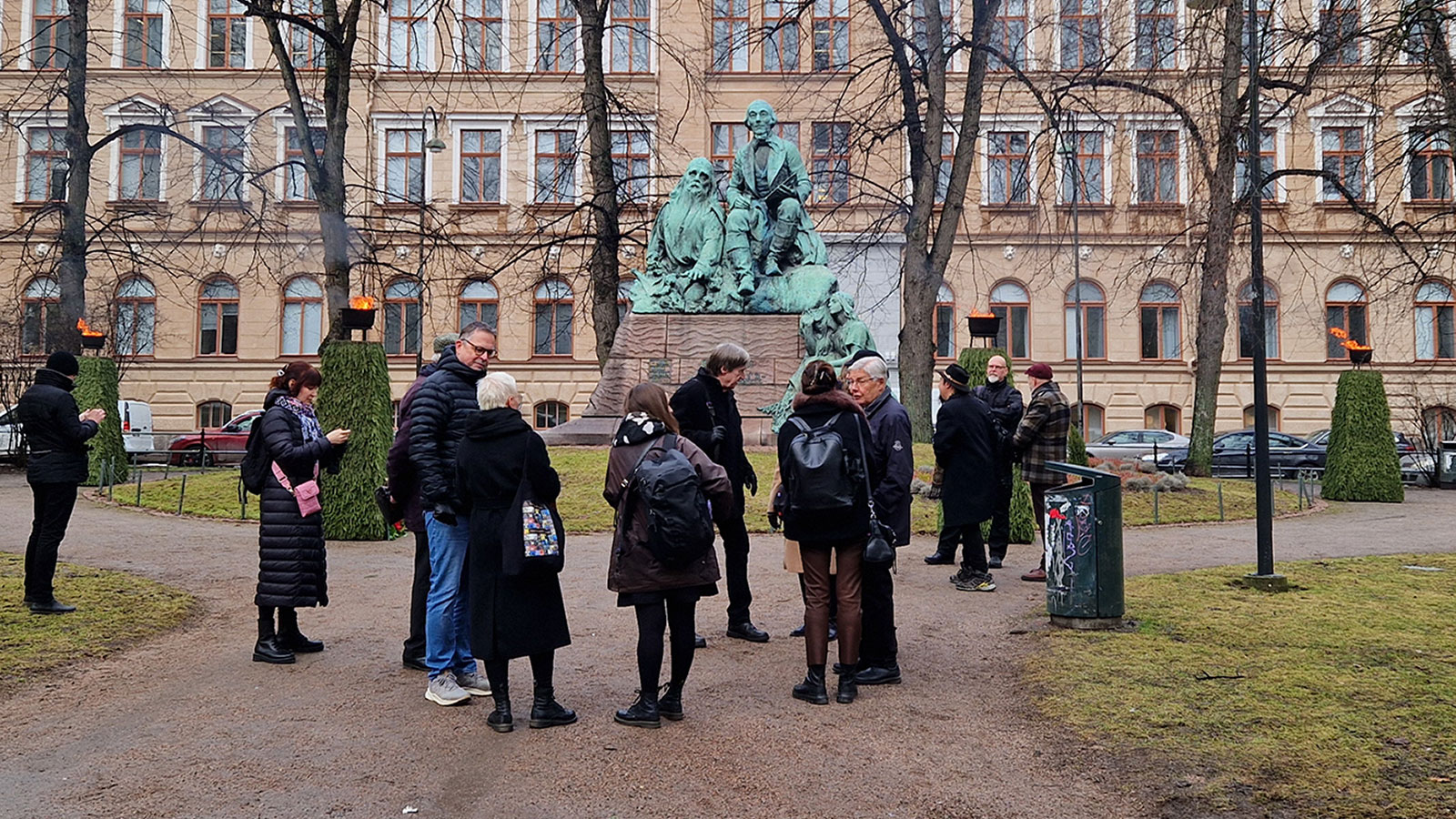
Kalevala Day 28.2.
Kalevala Day is celebrated annually on 28 February in Finland. It honours the Kalevala, Finland’s national epic, and the country’s rich tradition of folklore, oral poetry, and runosong. The date marks the day when Elias Lönnrot signed the preface to the first edition of the Kalevala in 1835.
Kalevala Day is also known as the Day of Finnish Culture and is an official flag flying day in Finland. The occasion highlights the importance of language, storytelling, music, and intangible cultural heritage in shaping Finnish identity. The day is marked by flag flying, cultural events, performances, and educational activities across the country.
Runosong
The runosong tradition is considered to be at least 2,000 years old and represents one of the oldest forms of oral poetry and singing in Northern Europe. Runosongs were traditionally sung across a wide Finnic cultural area, including present-day Finland, Karelia, Ingria, and Estonia. The songs are characterised by a distinctive poetic metre, parallelism, repetition, and a close connection between text, melody, and rhythm. Runosongs were typically performed without instrumental accompaniment or with simple instruments, and singing often took place in pairs or small groups.
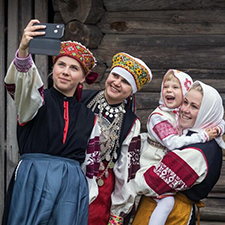
In Estonia, the Seto people preserve leelo, a distinctive local variation of runosong, demonstrating how the shared Finnic singing tradition developed regional forms while maintaining common poetic structures. Over time, runosong gradually disappeared from western Finland but remained alive in eastern regions, especially in Karelia, where oral transmission continued well into the 19th century.
The best-known work based on runosongs is the Finnish national epic, Kalevala. In the 19th century, Elias Lönnrot collected thousands of runosongs from Karelia and neighbouring areas. From this extensive oral material, he compiled the Kalevala, shaping individual poems into a coherent epic narrative. Although written down, the Kalevala remains deeply rooted in the sung tradition from which it emerged.
Today, runosong continues to inspire contemporary culture. Artists across disciplines — including musicians, dancers, composers, and visual artists — draw on its themes, poetic structures, and melodies. From traditional folk music to experimental performances and heavy metal, runosong remains a living source of creativity and cultural identity.
Lamenting
Lamenting is an ancient vocal tradition rooted in the Finnic cultural area, particularly in Karelia and Ingria. It is a highly expressive form of singing that lies between speech and song and is characterised by free rhythm, improvised text, and emotionally charged vocal expression. Laments were traditionally performed by skilled lamenters, often women, who had learned the practice through close personal transmission.
Lamenting was closely connected to rites of passage and significant life events. Laments were sung at funerals and graves to honour the dead and help guide them to the other world, at weddings to express the sorrow of separation and transition, and at other moments of profound personal or communal change. Through lamenting, singers gave voice to grief, loss, longing, and love, helping individuals and communities process emotional experiences.
In addition to mourning, laments were also performed in other social settings, such as communal gatherings, where they could express joy, gratitude, or deep emotional bonds. In this way, lamenting functioned not only as a response to loss but as a broader emotional language within the community.
Today, lamenting is being actively researched, revived, and reinterpreted by contemporary performers and scholars. While the original ritual contexts may have changed, the tradition continues to offer powerful means for emotional expression, cultural reflection, and connection to ancestral ways of understanding life and death.
Read more about project Laments in contemporary Finland
In the video Emmi Kuittinen sings lament in Finnish about Covid pandemic time.
Festivals and Events
KAINUU REGION
24 – 26. June 2026
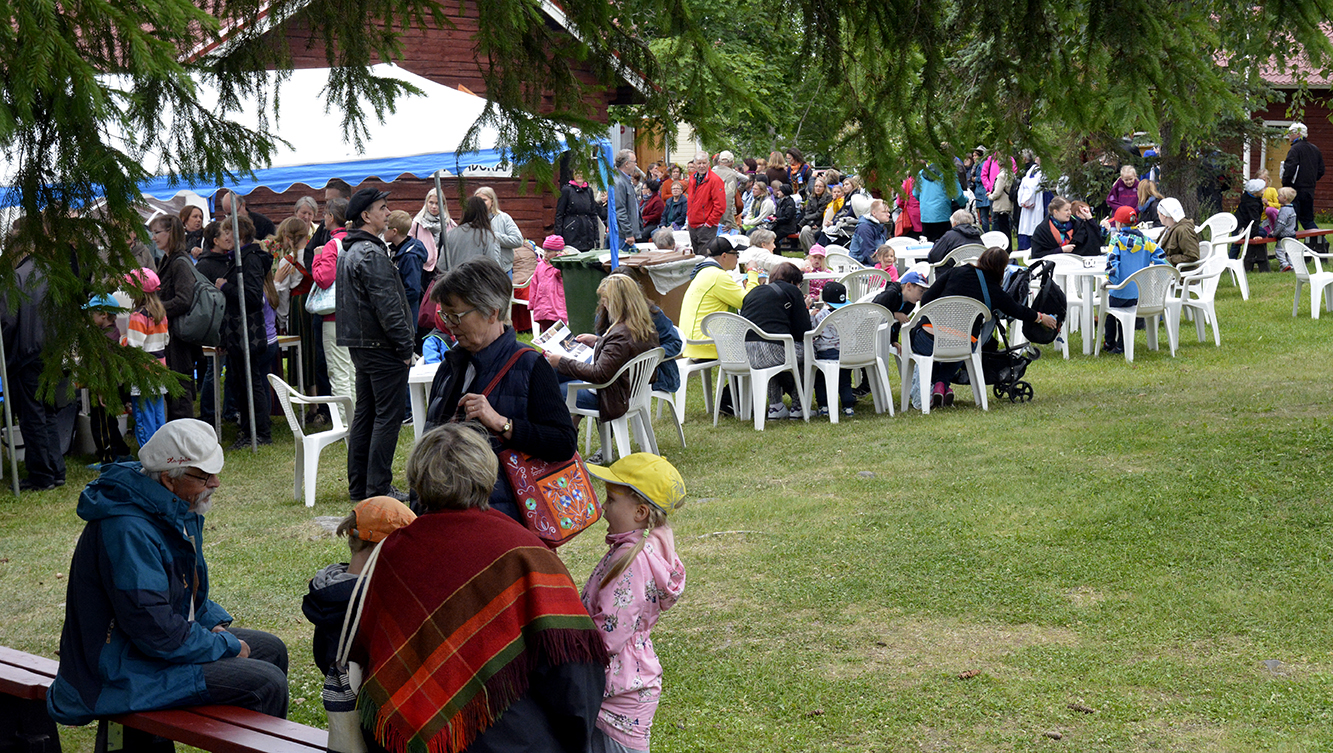
In Sommelo, among other programs, you are also able to study runosongs in courses and hear both as traditional performances and as contemporary songs.
NORTH KARELIA REGION
Kihaus Folk Festival in Rääkkylä
10.- 11.July 2026
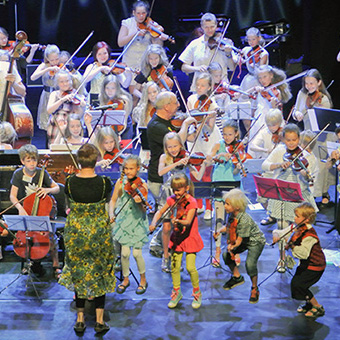
Kihaus Folk is an annual folk music festival held in Rääkkylä, deeply rooted in Karelian culture and Eastern Finnish musical heritage. In 2026, the festival celebrates its 35th anniversary, marking a significant milestone in its long-standing contribution to Finland’s folk music and cultural landscape.
Founded in 1991, Kihaus Folk has grown into one of the most important events in Finland presenting North Karelian folk music and Karelian cultural heritage. The festival is renowned for its high artistic quality, bringing together traditional Karelian music, contemporary interpretations, and leading performers from Finland and abroad. At its core is living Karelian tradition—distinctive vocal styles, rhythms, and narratives that reflect the region’s history, language, and identity.
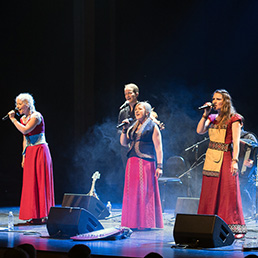
Kihaus Folk is closely connected to the rise of Värttinä, Finland’s most internationally renowned folk music group, which originates from Rääkkylä. Värttinä’s success has played a decisive role in bringing Karelian folk music to global audiences and has strongly influenced the artistic profile and reputation of the festival. The ensemble’s innovative interpretations of Karelian runo-singing and traditional melodies exemplify the creative continuity that Kihaus Folk represents.
The festival is built on an exceptionally strong local foundation. Extensive volunteer work, long-term community commitment, and decades of folk music education for children and young people have shaped Kihaus Folk into a sustainable, intergenerational cultural platform. Beyond concerts, the festival functions as a vibrant meeting place where Karelian culture is preserved, reinterpreted, and shared—strengthening regional identity while engaging audiences from Finland and around the world.
NORTH KARELIA REGION
Singing in Celebration of Summer at the Laulurinne Stage in Joensuu
The Opening of the Finnish Summer (Suven avaus) is an annual public singing event held at the end of the school year at Laulurinne in Joensuu, Finland. The celebration is centred on communal singing and is a long-standing tradition for the city.
The core of the event is a mass choir of approximately 6,000 primary school pupils from Joensuu, who perform songs rehearsed during the spring term. The programme also includes a ceremonial Opening of the Finnish Summer reading delivered by pupils, orchestral performances, and occasionally a solo performance by a visiting artist.
Musical accompaniment is traditionally provided by the Joensuu Wind Band, supported by musicians from the Joensuu City Orchestra and, in many years, students from local music institutions.
Each year, more than 10,000 people gather in front of the open-air stage to listen, sing along, and mark the beginning of summer together. In addition to Joensuu schools, pupils from other municipalities in North Karelia and from the Savo region, including Kuopio, regularly participate.
The tradition began in 1985 following the completion of Laulurinne, with the first event held on 31 May 1985. During the COVID-19 pandemic, the celebration was organised in a virtual format in 2020 and 2021.
In 2017, Suven avaus was included in Finland’s National Inventory of Living Cultural Heritage, maintained in cooperation with UNESCO.
NORTH KARELIA REGION
Museum Eliel
A region full of stories!
Museum Eliel offers experiences of and insights into the history and present day of North Karelia. The exhibitions at Eliel showcase the region’s diverse voices, breathtakingly beautiful nature and life through the ages.
The museum is located in the old Joensuu City Hall, on the edge of the market square
In English – www.museoeliel.fi
NURMES
Kulttuuri ja vapaa-aika
Nurmes Bomba Region
Nurmes’ North Karelian roots in the midst of the purest nature
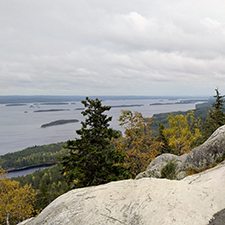
Experiences and cultures can surprise you closer than you think. Lakeland Bomba is one example of how Finland is full of unique destinations, cultures and tribes worth witnessing with your own eyes. Nurmes’ location at the crossroads of three provinces and in the middle of three national parks ensures that there is plenty to experience for nature and culture lovers.
Although the Bomba House is always the spiritual home of Karelian cultural heritage, tourists can associate their Bomba holiday with nature experiences on the Pielise and the small-town atmosphere of Puu-Nurmeksi. The strongest common factor between the many different aspects of the destination is the unspoilt nature and its peace, to which the Karelian roots, local culture and the immediate people add their own special touch. When you’re looking for something authentic, you’ll find it here.
Near the Bomba tourist centre in Nurmes, a reconstructed 11th-century Karelian village was built as a filming location for Kalevala: The Story of Kullervo, directed by Antti J. Jokinen. The historically inspired village provided an authentic setting for the dark, mythic narrative of the Kalevala and highlights Bomba as a significant site for both Karelian cultural heritage and contemporary film production.
Footprints of the Kalevala – Experience Trail
The “Footprints of the Kalevala” trail is an experience for the whole family, partially encountered through a smart device and enhanced with AR technology. The trail highlights important themes of Finnish identity and our beloved national epic, the Kalevala.
Along the route, you’ll get to know, for example, our national instrument, the kantele, our national animal, the bear, traditional round log building, the importance of nature in folk healing, and of course, the heart of Finnish life and our sacred space – the sauna.
RÄÄKKYLÄ
Rääkkylä – A Living Centre of Karelian Culture
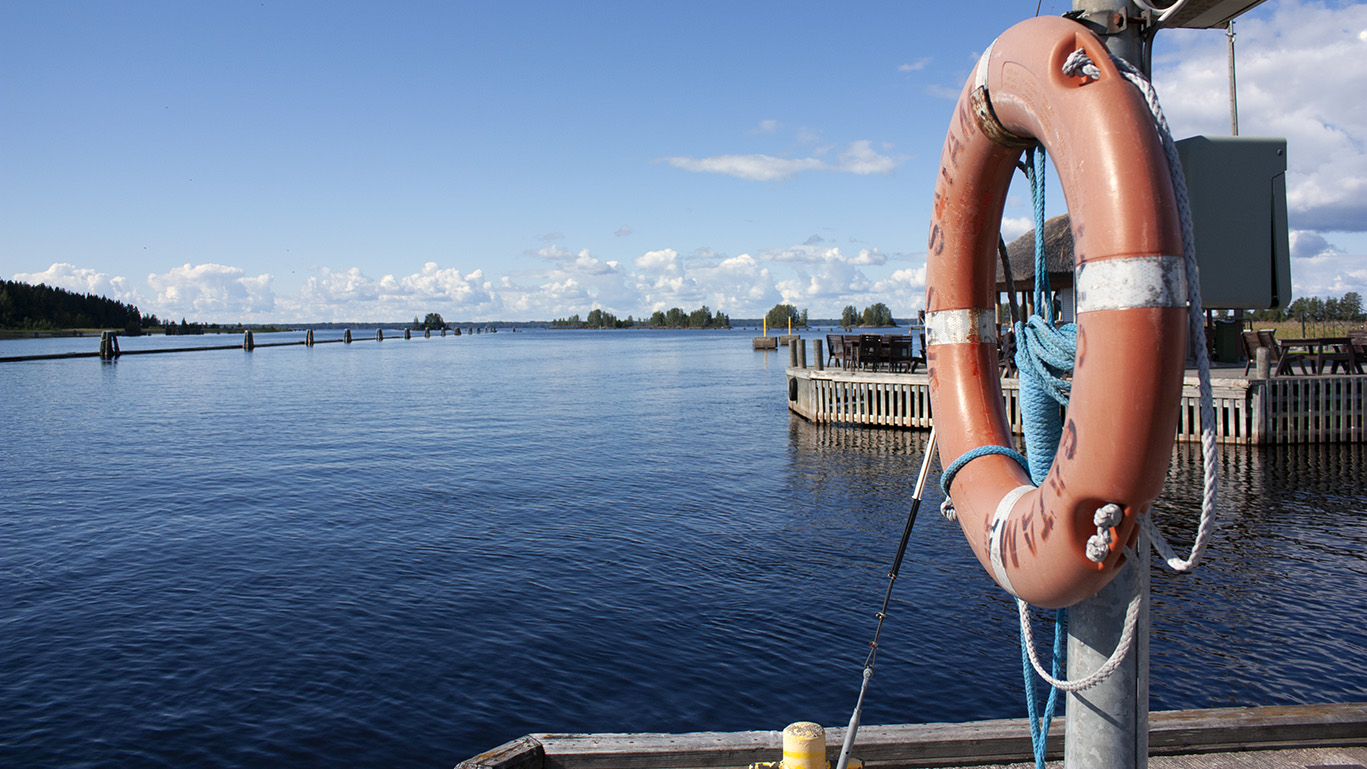
Rääkkylä is a culturally significant municipality in Eastern Finland, situated in North Karelia between the waters of Orivesi and Pyhäselkä. Despite its small size, Rääkkylä holds an established position as one of the key bearers of Karelian cultural heritage.
The municipality is internationally recognised through its strong folk music tradition. Rääkkylä is the birthplace of the renowned group Värttinä, whose interpretations of Karelian runo songs brought Finnish folk music to global audiences. This legacy is continued and celebrated through the Kihaus Folk Festival, which has for decades served as a meeting place for traditional and contemporary folk music.
Rääkkylä’s historical importance is further underlined by its connection to Finnish literary heritage. Elias Lönnrot, compiler of the Kalevala, visited the area during his seventh poetry-collecting journey in 1837, recording verses that contributed to the foundations of Finland’s national epic.
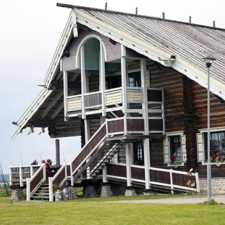
Local culture remains closely linked to Karelian customs, reflected in traditional cuisine, handicrafts, wooden architecture, and a strong sense of community. Cultural heritage in Rääkkylä is not confined to institutions, but forms an integral part of everyday life.
Rääkkylä offers visitors not only scenic lake landscapes, but also an authentic encounter with Finland’s eastern cultural roots.
Villa Ruusula
Villa Ruusula is a cultural guesthouse, residence, meeting and event venue located in Rääkkylä, North Karelia, on the peaceful northern shores of Lake Saimaa. It combines authentic Karelian traditions with warm hospitality, nature, and a relaxed atmosphere.
Guests can also book a variety of activity and programme services: Kantele playing work shop, Sari Kaasinen solo concert or even Karjalan piirakka (Karelian pasty) baking work shop.
Villa Ruusula is hosted by Sari Kaasinen, founder of the band Värttinä, musician, and cultural influencer, whose values are reflected throughout the house.
KOISTINEN KANTELE
KANTELE IS A TRADITIONAL FINNISH INSTRUMENT
In Finland’s national epic, Kalevala, the mage Väinämöinen makes the first kantele from the jawbone of a giant pike and a few hairs from Hiisi’s stallion. The music it makes draws all the forest creatures near to wonder at its beauty.
Later, after losing and greatly grieving over his kantele, Väinämöinen makes another one from a birch, strung with the hair of a willing maiden, and its magic proves equally profound.
Koistinen Kantele has been hand building and modernizing these beautiful sounding instruments since 1957. Koistinen Kantele has operated in Rääkkylä since 1995.
KITEE
Kitee – Where Kalevala Traditions Meet Modern Music Culture
Kitee is a vibrant town in North Karelia where strong cultural heritage, nature tourism, and contemporary music culture come together. Located between pristine lake landscapes and eastern Finnish folklore traditions, Kitee offers visitors both authentic experiences and internationally recognised cultural references.
Kitee has a close connection to the Finnish national epic, the Kalevala. The surrounding region is part of the Kalevalaic rune-singing area, where oral poetry, mythology, and folk traditions have played a central role in local culture for centuries. This heritage is reflected in events, storytelling traditions, and the broader cultural identity of the area.
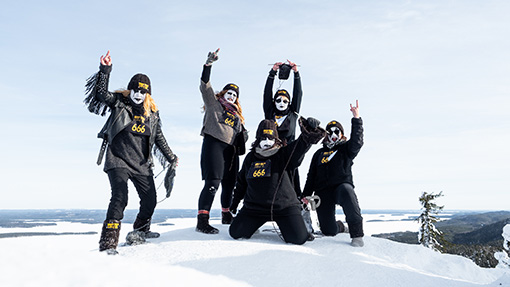
At the same time, Kitee is internationally known as the hometown of the symphonic metal band Nightwish, one of Finland’s most successful music exports. The band’s origins in Kitee highlight the town’s unique position where traditional cultural roots and modern creative expression coexist.
In addition to its cultural significance, Kitee is a popular destination for nature-based tourism. The nearby Lake Puruvesi, part of the Saimaa lake system, is known for its exceptionally clear waters and offers opportunities for boating, fishing, swimming, and winter activities. Seasonal events, local food culture, and outdoor recreation further enrich the visitor experience.
Kitee presents a distinctive blend of ancient storytelling traditions and globally recognised contemporary music, making it an appealing destination for visitors interested in Finnish culture, music, and nature.
Lönnrot’s Pine (The Sacrificial Pine of the Kainulainen Family)
Lönnrot’s Pine, also known as the sacrificial pine of the Kainulainen family, is a pine tree located in the village of Hummovaara in Kitee. During his first poetry-collecting journey, Elias Lönnrot recorded poems, folk beliefs, and incantations at the foot of this tree in June 1823, as recited by Juhana Kainulainen.
Over the course of two days, Lönnrot wrote down a total of 2,551 lines and 59 separate poems, most of which were incantations. These texts formed a significant part of Lönnrot’s poetry collection Runokokous Väinämöisestä (1833), also known as the so-called Proto-Kalevala. Among them were poems about the Sampo and The Song of Lemminkäinen.
The pine originally stood in the courtyard of the Kainulainen homestead, Kainula, and today it is a protected cultural landmark. The site also includes the remains of the house foundation and a cellar pit. The pine became the sacrificial tree of the Kainulainen family: Juhana Kainulainen, known as a hunter, would bring the skulls of bears he had killed to the tree while reciting spells.
About half a kilometre east of Lönnrot’s Pine lies a cup-marked stone known as the Devil’s Table, which is believed to have served as the sacrificial stone of the Kainulainen family. Next to Lönnrot’s Pine stands Juhanantupa, a Karelian-style log building completed in 1989, which houses, among other exhibits, wooden sculptures.